
The idea of taking a wiggly two‑year‑old for their first dental visit can feel a little overwhelming. Can they sit still? Will they cry? Will they even open their mouth?
Take a deep breath. You’re not alone, and it’s not as hard as you think. In fact, at Dr. Caleb Robinson’s office in New Philadelphia, we do toddler visits all the time. And most of them go surprisingly well. Here’s what you need to know before you walk through our doors.
When Should a Toddler First See the Dentist?
The short answer: by their first birthday, or within six months of getting their first tooth.
That sounds early to some parents. But there’s a good reason. Baby teeth matter more than most people realize. They hold space for adult teeth. They help with chewing and speaking. And cavities in baby teeth can spread to other teeth and even cause pain.
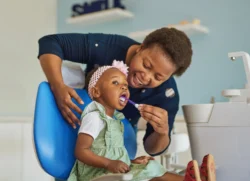
A first visit at age one or two is mostly about getting comfortable. We call it a “happy visit.” No big procedures. No scary tools. Just a gentle look inside, a quick count of teeth, and some simple advice for you.
What Actually Happens During the Visit?
You’ll stay with your toddler the whole time. That’s non‑negotiable. We want you right there, holding a hand or sitting close by.
Here’s what a typical first visit looks like:
- A warm welcome. Our team greets you both with smiles. We talk to your child at eye level. We let them touch a toothbrush or see the “tooth counter” (that’s our name for the explorer).
- The lap exam. For very young children, Dr. Robinson often does the exam with the child sitting in your lap, facing you. They lean back onto his knees. It feels safe because you’re right there.
- Counting teeth. We check for any obvious problems like white spots (early signs of decay) or gum swelling. Most toddlers have 8 to 12 teeth by age one.
- A gentle cleaning if they’re ready. Not all toddlers tolerate this on the first visit. That’s fine. We never force it. The goal is a positive experience, not a perfect cleaning.
- Advice for you. We’ll talk about brushing, fluoride, pacifiers, thumb sucking, and which foods help (and hurt) baby teeth.
The whole thing usually takes 15 to 20 minutes. Short and sweet.
How to Prepare Your Toddler at Home
A little preparation goes a long way.
- Read a book about the dentist. There are several good ones for toddlers. It normalizes the idea.
- Play pretend. Count each other’s teeth with a toothbrush. Let your child “check” your teeth first.
- Use positive words. Say “clean, strong, healthy” instead of “shot, drill, hurt.” Toddlers understand more than they can say.
- Schedule wisely. Pick a time when your child is usually well‑rested and fed. Avoid naptime or right before lunch.
What About Kids Who Cry or Wiggle?
Here’s a secret. We expect it.
Toddlers cry and wiggle. They change their minds about everything. That doesn’t bother us. We have seen it hundreds of times.
Dr. Robinson and his team are trained to work with little ones. We go slow. We explain everything before we do it. And if a child is truly upset, we stop. There’s always another day.
What matters most is that your child leaves with a good feeling about the dentist. Even if they cried for half the visit. Even if we only saw two teeth. That’s still a win.
Building a Lifelong Habit
The real goal of a toddler visit isn’t to find cavities. It’s to build trust. Children who have positive early dental experiences grow into adults who don’t fear the dentist. They learn that checkups are normal. That the dental office is a safe place. That people here are kind.
That foundation lasts a lifetime. So bring your two‑year‑old. Bring your one‑year‑old with two teeth. Bring your questions and your worries too. We’ve got you.
Call (330) 343‑2555 or request an appointment online. We’d love to meet your family.